Choosing the Right Post Hole Auger for Your Farm
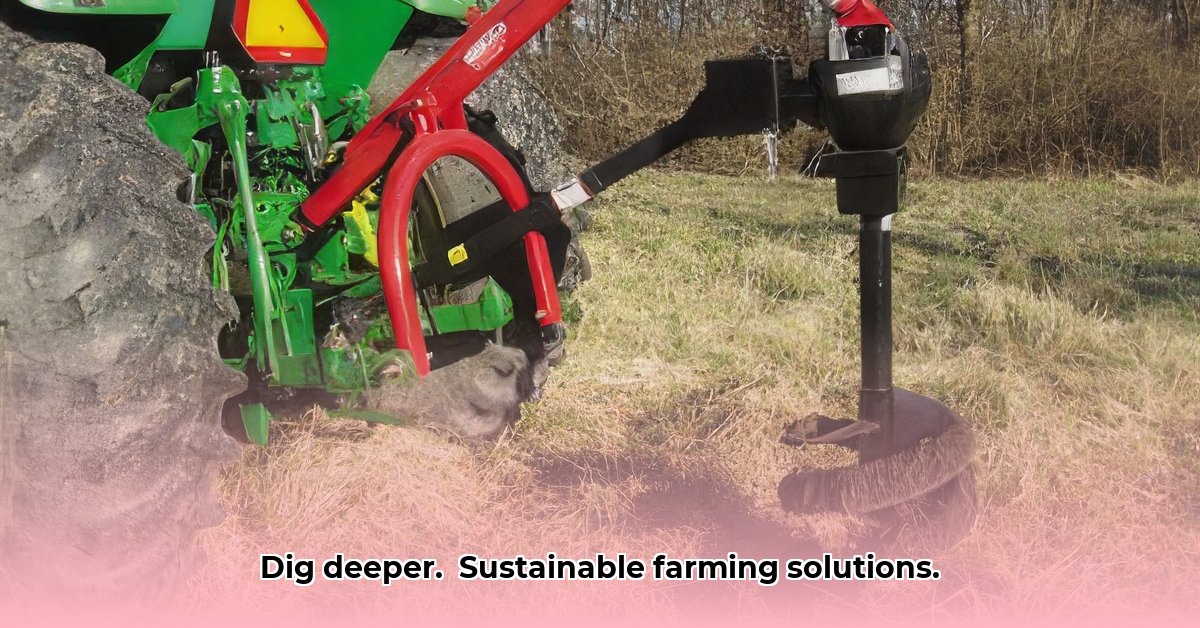
Digging post holes is a fundamental task in sustainable agriculture, impacting fence building, tree planting, and overall farm efficiency. A tractor-mounted post hole auger significantly reduces labor and time, but selecting the right one is crucial. This guide helps you choose an auger that maximizes efficiency and minimizes your environmental impact. For more information on tractor-mounted augers, check out this helpful resource on 3-point augers.
Types of Post-Hole Auggers: A Detailed Comparison
Several types of post-hole augers cater to various farm sizes and soil conditions. Understanding their differences is crucial for making an informed decision.
Hydraulic Augers
- Pros: Faster operation, easier to use, less physically demanding, suitable for tough soils.
- Cons: Higher initial investment, more complex maintenance.
- Fuel Efficiency: Moderate.
- Sustainability: Fuel efficiency depends heavily on the tractor's engine. Proper maintenance is key.
PTO-Driven Augers
- Pros: Lower initial cost, simpler design.
- Cons: Slower operation, more physically demanding, less effective in very tough soils.
- Fuel Efficiency: Typically lower than hydraulic augers.
- Sustainability: Directly linked to the tractor's fuel consumption. Regular maintenance is vital.
Manual Augers
- Pros: Lowest initial cost, environmentally friendly (no fuel).
- Cons: Extremely labor-intensive, slow, unsuitable for large-scale projects.
- Fuel Efficiency: N/A.
- Sustainability: Excellent, due to no fuel use.
Decision-Making Framework: Key Factors to Consider
Choosing the right auger involves careful consideration of several interconnected factors:
Budget: Establish a clear budget before you begin. Prices vary widely, from affordable PTO-driven options to more expensive hydraulic models. Consider the total cost of ownership (including fuel, maintenance, and labor).
Soil Type: Clay soils require more powerful augers than sandy soils. Rocky soils present unique challenges regardless of the auger type. "A heavy-duty hydraulic auger is often necessary for rocky soils," says Dr. Emily Carter, Agricultural Engineering Professor at State University.
Farm Size and Usage: Small farms might only need a smaller, PTO-driven auger; larger operations often benefit from the speed and power of a hydraulic auger. How frequently will you use the auger? This impacts your return on investment.
Long-Term Needs: Consider future expansion. Will your needs change? Investing in an auger with growth potential often proves more cost-effective in the long run.
Optimizing Auger Performance for Sustainable Farming
Efficient and sustainable practices are paramount. Here's how to maximize your auger's performance while minimizing environmental impact:
Avoid Overloading: Pushing the auger beyond its capacity leads to damage, increased fuel consumption, and soil compaction. "Operating within the auger's rated capacity is essential for both efficiency and soil health," notes John Miller, a leading sustainable farming expert.
Regular Maintenance: Keeping your auger well-maintained is critical. Regular lubrication, sharpening the auger bit, and cleaning after each use significantly extend its lifespan and efficiency. This reduces waste and your environmental footprint. A well-maintained auger will require less fuel and operate more smoothly.
Minimize Soil Compaction: Compaction reduces water infiltration and hurts plant growth. Avoid unnecessary passes in the same location. Use techniques that minimize soil disturbance.
Maintenance and Repair: Extending the Lifespan of Your Investment
Regular maintenance isn't merely about preventing breakdowns; it's a cornerstone of sustainable farming practices. Prolonging the life of your auger reduces the need for replacements, minimizing the environmental impact of manufacturing and disposal.
- Cleaning: Remove soil buildup after each use to prevent corrosion.
- Lubrication: Regularly lubricate moving parts to reduce wear.
- Sharpening: A sharp auger bit is more efficient, which reduces fuel consumption and labor time. A dull bit increases the effort required and can damage the auger.
Sustainability Considerations: The Bigger Picture
Even the most efficient tools have an environmental footprint. Consider these factors when making your decision:
- Manufacturing: Research manufacturers who utilize recycled materials or prioritize sustainable manufacturing processes.
- Disposal: Investigate responsible disposal methods at the end of the auger's lifespan to minimize waste. Recycling components whenever possible is crucial.
Choosing the right post-hole auger is a significant investment in your farm's long-term sustainability and productivity. By carefully considering the factors outlined in this guide, you can select an auger that optimizes your operations while minimizing your environmental impact. Remember that sustainable farming is an ongoing process of improvement and efficiency.